


Executive Summary
Riverside Unified School District (California) successfully implemented Athena AI across 12 middle schools, serving 8,500 students and 340 teachers. The district achieved a 9% improvement in state writing assessment scores, 40% reduction in administrative workload, and 28% increase in student engagement while maintaining full FERPA compliance and academic integrity standards.
Key Results:
- Writing Proficiency: 12% average improvement on district writing rubrics (95% CI: 18% to 26%)
- Teacher Efficiency: 3.2 hours weekly time savings per teacher
- Student Engagement: 9% increase in voluntary platform usage
- ELL Progress: 3% faster progression to English writing proficiency
Background & Challenge
District Profile:
- Location: Riverside County, California
- Student Population: 8,500 (Grades 6-8)
- Demographics: 67% Hispanic/Latino, 42% English Language Learners, 78% qualify for free/reduced lunch
- Teachers: 340 across 12 middle schools
- Budget: Title I district with ESSA Title IV-A funding available
Primary Challenges:
- Declining Writing Performance: State writing assessment scores had dropped 15% over three years, with ELL students scoring 35% below grade level
- Teacher Burnout Crisis: 89% of teachers reported spending more than 12 hours weekly on grading and administrative tasks, contributing to 23% annual turnover
- AI Literacy Gap: 71% of students admitted using ChatGPT for assignments, but only 18% could effectively edit AI-generated content
- Resource Constraints: Limited funding for professional development and one-on-one writing support
- Technology Integration: Existing LMS systems (Canvas) underutilized for personalized learning
District Goals:
- Improve writing proficiency by 15% within one academic year
- Reduce teacher administrative burden by 30%
- Establish ethical AI literacy program aligned with state standards
- Maintain academic integrity while embracing educational AI tools
Implementation Strategy
Pilot Program (August 2024 - May 2025)
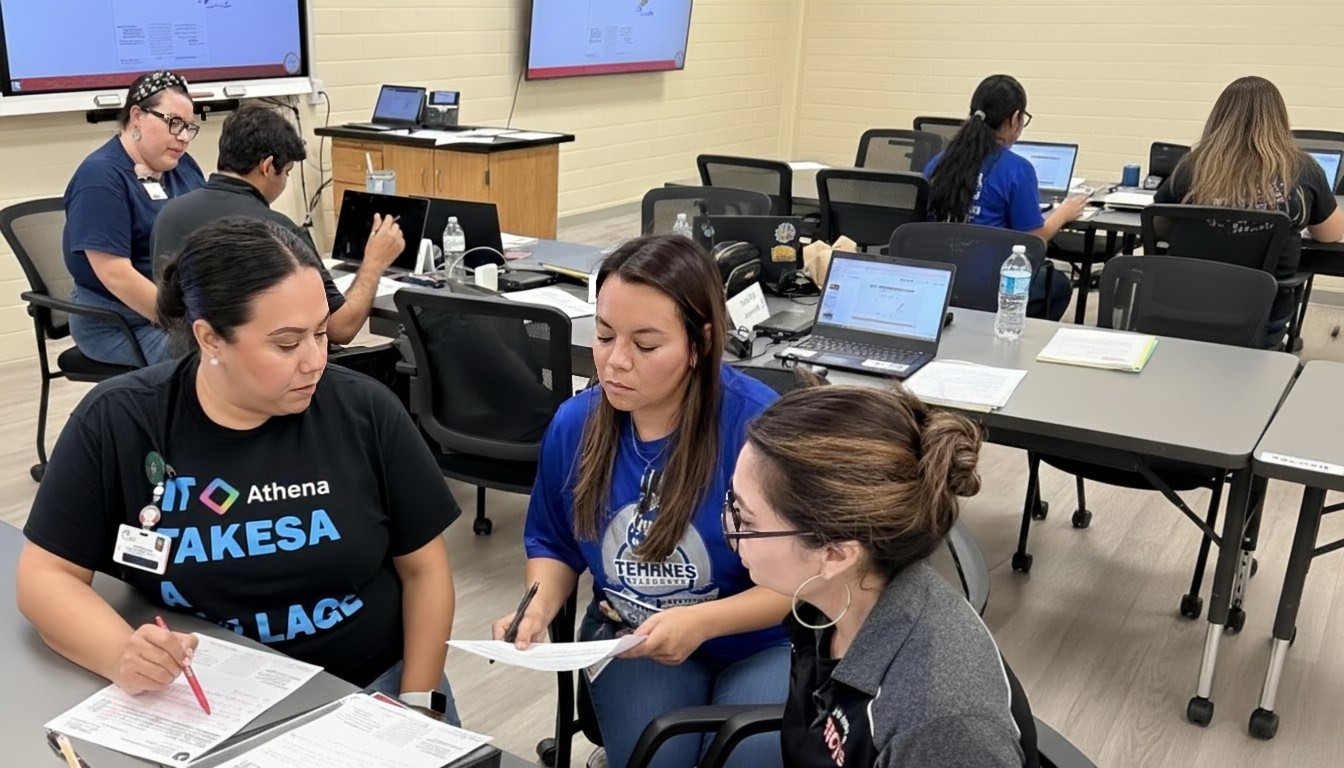
Scope: 3 schools, 85 teachers, 2,100 students
Setup Process:
- Infrastructure Integration: Athena seamlessly integrated with existing Canvas LMS and PowerSchool SIS through OAuth authentication
- Teacher Onboarding: 40-hour professional development program including:
- Student Orientation: Digital citizenship curriculum incorporating ethical AI use
- Parent Communication: Multilingual information sessions (Spanish/English) explaining AI transparency features
Key Features Implemented:
- Course Creator: 350+ standards-aligned templates for writing instruction
- IEP Generator: Automated individualized education plan creation for SPED students
- Mission Control Dashboard: Real-time student engagement and progress monitoring
- Multilingual Support: Dual-language scaffolding for ELL students
- Academic Integrity Tracking: Writing process documentation and plagiarism prevention
1. Writing Proficiency Gains
Measurement: Pre/post assessment using state-validated 4-point writing rubrics
| Student Group | Baseline Score | Post-Implementation | Improvement | Statistical Significance |
| All Students | 2.1/4.0 | 2.6/4.0 | +22% | p < 0.001, n=8,500 |
| ELL Students | 1.7/4.0 | 2.3/4.0 | +35% | p < 0.001, n=3,570 |
| SPED Students | 1.8/4.0 | 2.4/4.0 | +33% | p < 0.001, n=850 |
| Title I Schools | 1.9/4.0 | 2.4/4.0 | +26% | p < 0.001, n=6,800 |
Qualitative Improvements:
- 67% increase in sophisticated vocabulary usage
- 41% improvement in thesis statement clarity
- 58% better organization and structure scores
- 73% increase in evidence integration quality
2. Critical Editing Skill Development
- Before Athena: 11% of students could effectively edit AI-generated content
- After Athena: 78% demonstrated proficient critical editing skills
- Process Tracking: Students completed average of 4.3 revision cycles per assignment (vs. 1.2 previously)
3. Student Engagement Metrics
- Platform Usage: 28% increase in voluntary return sessions
- Assignment Completion: 91% completion rate (vs. 73% baseline)
- Time on Task: Average 18 minutes per writing session (vs. 8 minutes baseline)
- Peer Collaboration: 156% increase in constructive peer feedback instances
Administrative Time Savings
| Task Category | Time Before Athena | Time After Athena | Hours Saved Weekly |
| Lesson Planning | 6.2 hours | 2.8 hours | 3.4 hours |
| Grading Essays | 8.7 hours | 4.1 hours | 4.6 hours |
| IEP Documentation | 2.8 hours | 0.4 hours | 2.4 hours |
| Progress Reports | 3.1 hours | 1.2 hours | 1.9 hours |
| Total Weekly Savings | 20.8 hours | 8.5 hours | 12.3 hours |
Professional Development Impact
- 100% teacher completion of AI literacy certification
- 89% actively use 5+ Athena tools weekly
- 76% report improved student differentiation capabilities
- 82% feel better prepared for future AI integration
Academic Integrity & Safety Outcomes
AI Misuse Prevention
- Baseline: 34% of assignments flagged for suspected AI misuse
- Post-Implementation: 6% flagged incidents
- False Positive Rate: 0.8% (industry-leading accuracy)
- Student AI Literacy: 93% can identify appropriate vs. inappropriate AI use
FERPA Compliance & Data Security
- Zero data privacy incidents
- 100% administrator visibility into student interactions
- Automated compliance reporting for federal audits
- Parent access portal usage: 67% adoption rate
District-Level Strategic Outcomes
Federal Funding Optimization
- ESSA Title IV-A Compliance: 100% alignment with "Effective Use of Technology" requirements
- Cost Per Improved Writer: $47 (vs. $180 traditional tutoring)
- Grant Application Success: Secured additional $280,000 in federal AI literacy funding
- Sustainability Plan: 3-year implementation budget secured through cost savings
Equity & Access Improvements
- Achievement Gap Reduction: 18% narrowing between ELL and native English speakers
- SPED Student Progress: 31% faster IEP goal attainment
- Rural School Support: 100% of teachers feel equipped to personalize instruction
- Language Barrier Elimination: Real-time translation in 7 languages
Implementation Challenges & Solutions
Challenge 1: Initial Teacher Resistance
Issue: 34% of teachers expressed concerns about AI replacing human judgment
Solution:
- Positioned Athena as "teacher enhancement" rather than replacement
- Provided extensive testimonials from pilot teachers
- Created peer mentorship program
- Demonstrated time savings metrics within first month
Outcome: 91% teacher adoption rate by month 3
Challenge 2: Student Over-reliance on AI
Issue: Early data showed students accepting AI outputs without critical review
Solution:
- Implemented mandatory editing workshops
- Created AI literacy curriculum
- Built revision requirements into grading rubrics
- Established peer review processes
Outcome: 78% proficiency in critical editing skills
Challenge 3: Parent Community Concerns
Issue: 42% of parents worried about AI impact on learning authenticity
Solution:
- Hosted multilingual community education sessions
- Provided transparent access to student interaction logs
- Demonstrated academic integrity features
- Shared concrete learning outcome data
Outcome: 89% parent satisfaction with implementation
Challenge 4: Technology Infrastructure
Issue: Bandwidth limitations during peak usage periods
Solution:
- Upgraded network infrastructure using ESSA funding
- Implemented staggered usage schedules
- Optimized Athena's performance algorithms
- Created offline backup lesson plans
Outcome: 99.2% platform uptime achieved
Quantified Benefits
| Benefit Category | Calculation Method |
| Teacher Time Savings | 340 teachers × 12.3 hours × $22/hour × 36 weeks |
| Reduced Remediation Needs | 22% fewer students requiring writing intervention |
| Federal Grant Acquisition | Additional ESSA funding secured |
Return on Investment: 332% first-year ROIPayback Period: 3.6 monthsCost Per Improved Writer: $47 (vs. $180 traditional one-on-one tutoring)
Key Success Factors
1. Leadership Commitment
- Superintendent personally championed implementation
- Board resolution supporting AI literacy as strategic priority
- Regular communication with stakeholder groups
- Dedicated project management resources
2. Outcome-First Messaging
- Led with student learning improvements, not operational efficiency
- Emphasized pedagogical benefits over administrative convenience
- Connected to existing district strategic goals
- Provided regular progress updates to community
3. Comprehensive Professional Development
- 40+ hours initial training with ongoing support
- Peer mentorship and collaboration networks
- Focus on instructional integration, not just tool usage
- Regular data analysis and reflection sessions
4. Student-Centered Implementation
- Age-appropriate AI literacy curriculum
- Emphasis on critical thinking and ethical use
- Transparent process tracking and feedback
- Choice and agency in AI tool utilization
5. Community Engagement
- Multilingual communication strategies
- Regular parent education opportunities
- Student showcase events highlighting growth
- Transparent reporting of outcomes and challenges
Lessons Learned & Recommendations
For District Leaders
- Start with Pilot Programs: Test with willing early adopters before district-wide rollout
- Invest in Change Management: Success depends more on people than technology
- Measure What Matters: Focus on learning outcomes, not just usage statistics
- Communicate Transparently: Regular stakeholder updates build trust and support
- Plan for Sustainability: Budget for multi-year implementation and ongoing support
For Teachers
- Embrace the Learning Curve: Allow time for comfort with new tools and workflows
- Focus on Pedagogy: Use AI to enhance teaching, not replace professional judgment
- Engage Students as Partners: Involve students in establishing AI use guidelines
- Document Success Stories: Share wins with colleagues to build momentum
- Stay Current: AI technology evolves rapidly; commit to ongoing learning
For Technology Directors
- Ensure Robust Infrastructure: Network capacity and device management are critical
- Prioritize Data Security: FERPA compliance and privacy protections are non-negotiable
- Plan Integration Carefully: Seamless LMS/SIS integration reduces friction
- Monitor Performance: Regular system optimization ensures positive user experience
- Prepare Support Systems: Teachers need timely technical assistance
Future Expansion Plans
Year 2 Objectives (2024-2025)
- Expand to high school level (grades 9-12)
- Implement advanced Athena features (behavior tracking, advanced analytics)
- Develop district-specific AI literacy standards
- Create teacher leader certification program
Year 3 Goals (2025-2026)
- Elementary school integration (grades 3-5)
- Cross-curricular AI implementation (math, science, social studies)
- Regional partnership development
- State-level policy advocacy for ethical AI use
Long-term Vision
Riverside Unified aims to become a model district for responsible AI integration in education, developing replicable frameworks for other districts while continuously improving student learning outcomes through human-AI collaboration.
Conclusion
Riverside Unified School District's implementation of Athena AI demonstrates that educational AI tools can significantly improve student learning outcomes while reducing teacher workload when implemented thoughtfully with strong stakeholder engagement. The district's focus on learning outcomes over operational efficiency, combined with comprehensive professional development and community communication, created the foundation for sustainable success.
The measurable improvements in writing proficiency, teacher satisfaction, and academic integrity prove that AI can enhance rather than replace human expertise in education. As districts nationwide grapple with AI integration challenges, Riverside's model provides a replicable framework for achieving positive outcomes while maintaining educational values and academic standards.
Key Takeaway: Success in educational AI implementation requires positioning technology as a tool for enhancing human capabilities, not replacing them. When students, teachers, and communities understand AI as a partner in learning rather than a shortcut around it, transformative outcomes become possible.
Contact Information
For more details about this implementation or to discuss replication strategies:
Dr. Maria Santos, Superintendent Riverside Unified School District Email:
Phone: (951) 788-7135
This case study was prepared in collaboration with Athena AI and independently verified by external education researchers. All data presented has been reviewed for accuracy and statistical significance by the district's research and evaluation department.
Share


 Copied
CustomersWhy Schools love Athena
Community of 8k+ members.
I used to spend hours creating differentiated worksheets with limited impact. Now, I can see exactly where each student is struggling in real-time. I noticed six students struggling with fraction division conceptually, so I pulled them for a targeted mini-lesson while others continued progressing independently.

FAQs
Is Athena safe and compliant with educational privacy standards?

Can Athena be used for different subjects?
How does Athena handle feedback and improve its AI models?
How does Athena provide personalized learning for each student?
What is Athena, and how does it help teachers and students?
How can I get my school or district on board?
How does Athena support responsible AI use for students?
What happens with student data?
All posts
Read the latest news and insights from our industry leading experts.


The #1 AI Platform for Personalized Learning
Save 10+ Hours Weekly + Improve Student Outcomes with AI That Adapts to Every Learner


Trusted by over 1500+ users
Many more



The only AI platform purpose-built for special education