


All blogs
The Socratic Method of Teaching: Save These Examples & Tips
Share


 Copied


5min read

June 08, 2025
What is the Socratic Method of Teaching?
I do not teach, I only ask questions.
Socrates
The Socratic method of teaching is a dialectical approach to teaching that originated with the ancient Greek philosopher Socrates. Socrates believed that true knowledge could not be simply transferred from teacher to student, but rather must be actively constructed through a process of questioning and dialogue.
Unlike traditional didactic teaching approaches, the Socratic method relies on the instructor posing a series of carefully crafted, open-ended questions to students, rather than providing direct instruction or answers. The goal is to guide students to formulate their own views or arguments and arrive at their own conclusions and insights about the topic, rather than simply memorize information. Educators also play a role to challenge the students’ view to facilitate the strengthening of their logical reasoning.
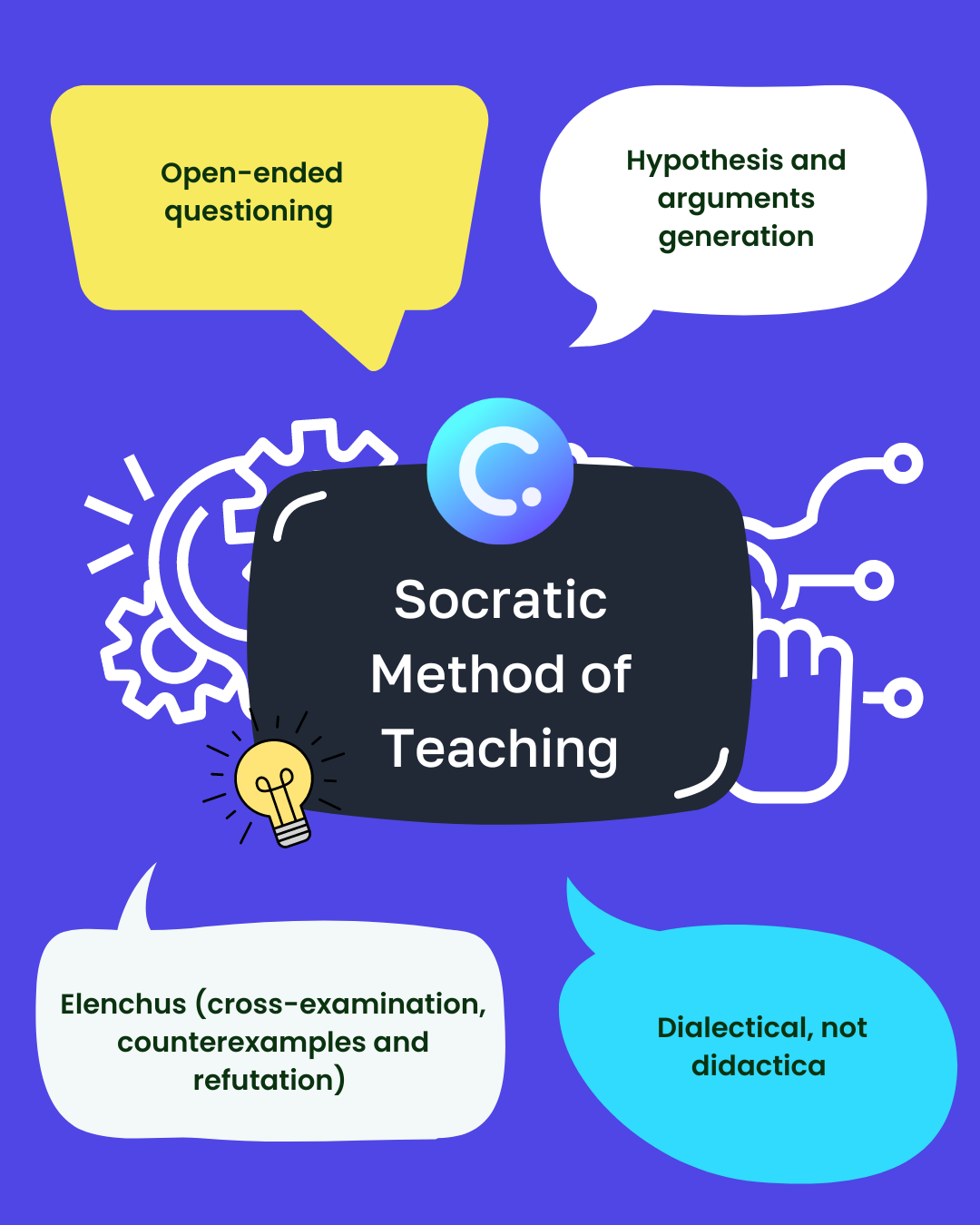
Most educational systems around the world focus heavily on the outcome of exams, rather than the true understanding of a subject. The Socratic method, however, is centered around fostering critical thinking and problem-solving skills, rather than just memorization of facts.
Because of their similar structures, some may compare the Socratic method of teaching questions to Bloom’s Taxonomy’s questions. However, while the former is focused on guiding students to uncover and address their own misconceptions and building arguments through a process of inquiry and dialogue, the latter is used more as a framework for designing questions and tasks that assess different levels of student understanding and cognitive abilities.
What Does an Ancient Greek Philosopher Have to Do with Modern Teaching? The Science behind Socratic Method of Teaching
The Socratic method has been the subject of much scholarly debate and analysis, with researchers examining its historical roots and its potential applications in contemporary education. In most modern day education systems where exam outcome triumphs true understanding of a subject matter, this method by Socrates proved to significantly augment the learning and critical thinking of students which has been demonstrated empirically in research.

Image source: Owlcation
- A
- Another
- Additionally, a
- This
As we can see, the Socratic method of teaching has demonstrated its effectiveness in developing crucial skills like critical thinking, problem solving, and logical reasoning that are essential for students’ success in the 21st century. This ancient teaching approach continues to hold relevance and application in modern educational practices, as evidenced by the empirical research in this domain.
Advantages and Disadvantages of Socratic Method of Teaching
| Advantages | Disadvantages |
| Adapts to diverse learning styles: The Socratic method of teaching can be tailored to suit different learning styles, as it involves a range of questioning techniques and encourages students to actively contribute to the discussion, making it a perfect complement of Differentiated Instruction. | Significant time and resources: A significant investment of time and resources is required from both the instructor and the students. This can be a challenge in educational settings where there are constraints on time and resources, and where there may be a need to cover a large amount of material in a relatively short period. |
| Promotes deeper understanding: By guiding students through a process of higher-level questioning and self-discovery, the Socratic method can lead to a more profound and lasting understanding of the subject matter. | Not suited for all subject matter: The Socratic method of teaching may not be well-suited for all types of subject matter or for all learning styles. For instance, it may be less effective in teaching highly technical or factual content that requires a more direct instructional approach. |
| Cultivates lifelong learning: The Socratic method of teaching encourages students to develop a questioning mindset and a love for learning, which can serve them well throughout their lives, not just in the classroom. | |
| Enhances communication competencies: The Socratic of teaching requires students to articulate their ideas clearly, listen attentively to others, and engage in constructive dialogue, a helpful tool for Social Emotional Learning. |
Despite the disadvantages stated, in the following section, we will delve into real-world classroom examples to help you apply the Socratic method effectively in your teaching without the need to rely on resource-intensive approaches. And as we shall see, contrary to popular opinion, there is no need to be an expert in a subject matter to be a great Socratic teacher.
Socratic Method of Teaching Examples for Different Subjects
1. Socratic seminar
💡 What is it?
Socratic seminar is the most straightforward way to apply the Socratic method of teaching in the classroom. In a socratic seminar, the instructor poses open-ended questions to a group of students, who engage in a collaborative discussion to explore a topic in-depth. This method encourages students to think critically, express their perspectives, and challenge each other’s ideas.

Image source: We Are Teachers
✨ Best for:
Teaching deep analysis of texts, literature or scenarios, and debates.
⚙️ Applying to classroom setting:
Setting the Stage:
- Clarification Questions: Begin by asking participants to clarify their initial thoughts or interpretations on the topic or text under discussion. This helps to establish a baseline understanding. Example: “Can you clarify your interpretation of the main theme in this passage?”
- Probing Assumptions: Encourage participants to articulate the assumptions underlying their perspectives or arguments. This helps to uncover implicit biases or preconceived notions. Example: “What assumptions about human behavior are implicit in your argument?”
Deepening Understanding:
- Evidential Questions: Prompt participants to provide evidence from the text or relevant sources to support their claims or interpretations. Example: “What specific evidence from the text supports your analysis of the character’s motivations?”
- Conceptual Questions: Explore broader concepts or theories related to the topic, encouraging participants to connect their interpretations to larger themes or frameworks. Example: “How does this discussion about justice in the text relate to broader philosophical theories we’ve studied?”
Encouraging Dialogue:
- Relevance Questions: Guide the discussion towards understanding the significance of the topic or text within a larger context, such as contemporary issues or historical relevance. Example: “Why is this theme important to consider in our current societal context?”
- Alternative Viewpoints: Challenge participants to consider alternative perspectives or interpretations, fostering a more nuanced and inclusive discussion. Example: “How might someone with a different cultural background interpret this passage differently?”
Critical Reflection:
- Implications and Consequences: Explore the implications of different interpretations or arguments, encouraging participants to consider the broader impact of their ideas. Example: “What are the ethical implications of the character’s actions in this scene?”
- Meta-questions: Step back to reflect on the process of inquiry itself, prompting participants to consider the methods and strategies used in their analysis. Example: “How does our discussion approach deepen our understanding of the text?”
Pro Tip: Randomise grouping with ClassPoint’s grouping to ensure diversity of opinions in Socratic Seminars, promoting open-mindedness. 2. Role play
💡 What is it?
Using the Socratic Method of teaching in role-playing scenarios can be an effective way to deepen engagement, encourage critical thinking, and explore complex issues. By having students assume different characters or perspectives in role-playing exercises, they are prompted to consider the nuances and complexities of the topic from multiple vantage points, which can lead to a richer and more comprehensive understanding.
✨ Best suited for:
Exploring complex moral and ethical issues with no definite answers.

Image source: eSchool News
⚙️ Applying to classroom setting:
Character Development:
- Clarification Questions: Ask players to clarify their character’s motivations, backstory, and goals. This helps them flesh out their role more fully. Example: “Can you clarify why your character feels strongly about this issue?”
- Probing Assumptions: Challenge players to consider the underlying assumptions their character might have about other characters or the situation. Example: “What assumptions does your character make about the intentions of the other party?”
- Evidential Questions: Encourage players to provide evidence from their character’s background or personality traits to support their actions or decisions. Example: “What experiences from your character’s past influence their approach to solving this problem?”
- Conceptual Questions: Explore how the character’s beliefs or values shape their decisions and interactions within the role-play scenario. Example: “How does your character’s personal philosophy guide their decisions in this negotiation?”
Conflict Resolution:
- Alternative Viewpoints: Encourage players to consider different perspectives within the role-play, which can lead to more nuanced and realistic interactions. Example: “How might your character negotiate differently if they were to prioritize maintaining long-term relationships over short-term gains?”
- Implications and Consequences: Discuss the potential outcomes of different choices within the role-play scenario, helping players think strategically. Example: “What are the ethical consequences of your character’s proposed course of action?”
Meta-questions:
- Reflective: Use questions to help players reflect on what they’ve learned about their characters and themselves through role-playing. Example: “How does exploring this scenario enhance your understanding of your character’s motivations?”
Pro Tip: Generate instant Socratic method questions using ClassPoint AI, an AI quiz generator trained to scan your PowerPoint slides and generate relevant, high quality questions for classroom discussions.3. Ethical dilemma
💡 What is it?
The Socratic method of teaching is well-suited for examining ethical dilemmas, as the instructor can guide students through a series of questions that challenge their moral reasoning and push them to consider multiple viewpoints on a contentious issue.
✨ Best suited for:
Teaching moral studies and moral dilemmas
⚙️ Applying to classroom setting:
Clarifying the Ethical Dilemma:
- Clarification Questions: Start by clarifying the specific ethical dilemma at hand and its key elements.
- Probing Assumptions: Encourage individuals to articulate their underlying assumptions about the ethical principles involved.
Exploring Ethical Frameworks:
- Evidential Questions: Prompt participants to provide evidence or examples from real-life situations or philosophical texts that support their ethical stance.
- Conceptual Questions: Discuss how different ethical theories or frameworks (e.g., utilitarianism, deontology, virtue ethics) might approach the dilemma.
Considering Alternative Perspectives:
- Relevance Questions: Explore the broader implications and relevance of the ethical dilemma in societal, cultural, or organizational contexts.
- Alternative Viewpoints: Encourage participants to consider alternative viewpoints or ethical principles that might lead to different conclusions.
Reflecting on Consequences:
- Implications and Consequences: Discuss the potential outcomes and consequences of each ethical decision or action.
- Meta-questions: Step back to reflect on the process of ethical reasoning and decision-making, examining the methods and criteria used to evaluate ethical dilemmas.

Pro Tip: Draw a concept map of moral concepts and views discussed to help students consolidate what they have learned with ClassPoint’s digital whiteboard and presentation tools.4. Scientific investigation
💡 What is it?
Often, in science classes, students learn through theories and participate in scientific experiments. But science classes can be made more fun and memorable with the Socratic method of teaching. Teachers can engage students in the process of scientific inquiry, where they are encouraged to formulate alternative hypotheses or viewpoints.
✨ Best suited for:
Teaching scientific enquiries, issues or experiments

Image source: Study.com
⚙️ Applying to classroom setting:
Topic Introduction:
- Clarification Questions: Begin by asking students to clarify their initial understanding of the scientific concept or topic being studied.
- Example: “What do you understand by the term ‘cell division’?”
- Probing Assumptions: Encourage students to articulate their assumptions about the phenomena under study or the theories being discussed.
- Example: “What assumptions do you think scientists made when developing the theory of evolution?”
Exploring Scientific Concepts:
- Evidential Questions: Prompt students to provide evidence or examples from experiments, observations, or readings to support their understanding.
- Example: “Can you provide evidence from the textbook that supports the theory of plate tectonics?”
- Conceptual Questions: Discuss how the scientific concept or theory being studied connects to other scientific principles or real-world applications.
- Example: “How does the concept of energy transfer apply to ecological systems?”
Encouraging Inquiry and Exploration:
- Relevance Questions: Guide students to consider the relevance of the scientific concept or theory within broader scientific fields or everyday life.
- Example: “Why is understanding genetics important in the context of modern medicine?”
- Alternative Viewpoints: Encourage students to explore different perspectives or interpretations of scientific phenomena, promoting open-mindedness.
- Example: “How might alternative theories explain the observed patterns in the fossil record?”
Critical Thinking and Problem-Solving:
- Implications and Consequences: Discuss the implications of scientific findings or theories, prompting students to consider ethical, environmental, or societal impacts.
- Example: “What are the ethical implications of genetic engineering in agriculture?”
- Meta-questions: Step back to reflect on the scientific method itself, examining the methods used, potential biases, and limitations of scientific inquiry.
- Example: “How does the process of hypothesis testing contribute to our understanding of natural phenomena?”
Pro Tip: Socratic method questions are perfect for Science formative assessment at the end of the class or semester. 5. Case study analysis
💡 What is it?
By presenting students with real-world case studies, the Socratic method of teaching can be used to guide them through the analysis of complex problems, the evaluation of alternative solutions, and the development of critical thinking skills.
✨ Best suited for:
Analyzing and solving complex, real-world problems or psychology or business case studies.

⚙️ Applying to classroom setting:
Case Study Introduction:
- Clarification Questions: Begin by asking students to clarify the key facts, issues, and stakeholders involved in the case study.
- Example: “Can you clarify the main challenges faced by the company in this case study?”
- Probing Assumptions: Encourage students to articulate their assumptions about the motivations, decisions, or actions of individuals or organizations in the case.
- Example: “What assumptions do you think the CEO made about market trends when deciding on the new product launch?”
Analyzing and Evaluating Options:
- Evidential Questions: Prompt students to provide evidence from the case study or external research to support their proposed solutions or analyses.
- Example: “What data from the case study supports your recommendation for the company’s marketing strategy?”
- Conceptual Questions: Discuss how theoretical concepts, frameworks, or models apply to the case study, encouraging students to connect theory with practice.
- Example: “How does Porter’s Five Forces model help us understand the competitive dynamics in this industry?”
Considering Alternative Approaches:
- Relevance Questions: Guide students to consider the relevance and significance of different solutions or approaches within the context of the case study.
- Example: “Why is it important for the company to consider sustainability practices in its supply chain management?”
- Alternative Viewpoints: Encourage students to explore different perspectives or alternative solutions, fostering a comprehensive analysis of the case.
- Example: “How might stakeholders with differing interests view the company’s decision to expand into international markets?”
Drawing Conclusions and Lessons Learned:
- Implications and Consequences: Discuss the potential outcomes and implications of implementing different strategies or decisions identified in the case study.
- Example: “What are the ethical implications of the company’s response to the environmental concerns raised in the case study?”
- Meta-questions: Reflect on the process of analyzing the case study, exploring the reasoning behind decisions, and considering the broader implications.
- Example: “How does analyzing this case study contribute to our understanding of business strategy and decision-making?”
Pro Tip: Don’t forget to pause for reflection and keep your discussion sharp using ClassPoint’s timer. 6. Art critique
💡 What is it?
Socratic method of teaching can also be applied to art classes to prompt students to analyze and interpret artistic works through thoughtful questioning. Art classes are not only limited to technical skills or art history, but can be made more meaningful by guiding students to critically analyse and interpret works of art, deepening their understanding of artistic concepts.
✨ Best suited for:
Developing visual literacy and critical thinking abilities in art classes.
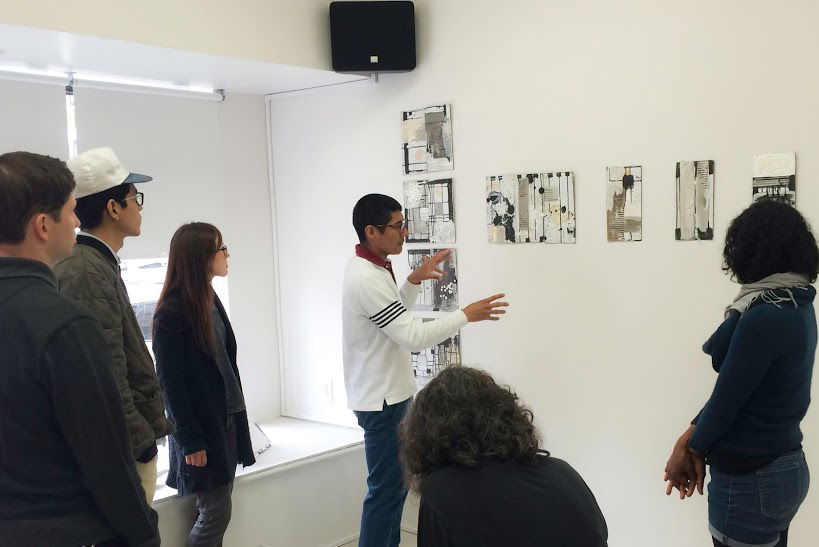
⚙️ Applying to classroom setting:
Artwork Observation and Description:
- Clarification Questions: Begin by asking students to describe the artwork objectively, focusing on its visual elements and composition.
- Example: “Can you describe the use of color and light in this painting?”
- Probing Assumptions: Encourage students to articulate their initial impressions and assumptions about the artist’s intent or message conveyed by the artwork.
- Example: “What assumptions are you making about the emotions the artist wanted to evoke?”
Analyzing Artistic Techniques:
- Evidential Questions: Prompt students to provide evidence from the artwork itself to support their interpretations or analyses.
- Example: “What visual elements suggest movement or stillness in this sculpture?”
- Conceptual Questions: Discuss how artistic techniques (e.g., perspective, brushstroke, composition) contribute to the overall meaning or impact of the artwork.
- Example: “How does the use of negative space affect the viewer’s perception of the subject?”
Interpreting Meaning and Context:
- Relevance Questions: Guide students to consider the cultural, historical, or personal relevance of the artwork and its themes.
- Example: “Why is it important to consider the socio-political context in which this artwork was created?”
- Alternative Viewpoints: Encourage students to explore different interpretations or perspectives on the artwork, considering diverse cultural or aesthetic viewpoints.
- Example: “How might someone from a different cultural background interpret the symbolism in this artwork?”
Reflecting on Aesthetic Values:
- Implications and Consequences: Discuss the implications of the artwork’s aesthetic choices and artistic decisions on its overall impact and message.
- Example: “What are the ethical implications of the artist’s use of controversial imagery in this piece?”
- Meta-questions: Reflect on the process of critiquing art, examining the methods used, personal biases, and the evolving nature of artistic interpretation.
- Example: “How does our discussion about this artwork contribute to our understanding of art appreciation and critique?”
Pro Tip: Add a layer of visual appeal to your Socratic classroom by encouraging students to upload the art pieces they have researched to be discussed collectively in the class. 7. Literary analysis
💡 What is it?
As a tool for higher-order thinking, the Socratic method of teaching is a perfect companion in guiding students through a close reading of a text, encouraging them to explore alternative interpretations and strengthen their understanding of a text with supporting evidence and arguments.
✨ Best suited for:
In-depth analysis and interpretation of literary works

⚙️ Applying to classroom setting:
Textual Analysis and Interpretation:
- Clarification Questions: Begin by asking students to clarify their understanding of key plot points, characters, or literary devices used in the text.
- Example: “Can you clarify the motivations behind the protagonist’s actions in this chapter?”
- Probing Assumptions: Encourage students to articulate their assumptions about the author’s intent or the meaning of specific passages.
- Example: “What assumptions are you making about the symbolism of the ‘green light’ in The Great Gatsby?”
Exploring Themes and Literary Techniques:
- Evidential Questions: Prompt students to provide evidence from the text to support their interpretations or analyses of themes or literary techniques.
- Example: “What specific passages illustrate the theme of isolation in Frankenstein?”
- Conceptual Questions: Discuss how literary techniques (e.g., symbolism, foreshadowing, irony) contribute to the overall meaning or mood of the text.
- Example: “How does the use of flashbacks enhance our understanding of the protagonist’s development?”
Interpreting Character Motivations and Relationships:
- Relevance Questions: Guide students to consider the relevance of character motivations or relationships within the broader context of the text’s themes or historical background.
- Example: “Why is it important to consider the social context when analyzing the relationships between characters in Pride and Prejudice?”
- Alternative Viewpoints: Encourage students to explore different perspectives on characters’ actions or motivations, considering different literary theories or historical contexts.
- Example: “How might a feminist critique interpret the role of female characters in Jane Eyre?”
Reflecting on Authorial Choices and Context:
- Implications and Consequences: Discuss the implications of the author’s stylistic choices or narrative decisions on the reader’s interpretation and engagement with the text.
- Example: “What are the ethical implications of the author’s portrayal of violence in To Kill a Mockingbird?”
- Meta-questions: Reflect on the process of literary analysis, examining the methods used, personal biases, and the evolving nature of interpretation over time.
- Example: “How does our discussion about this novel contribute to our understanding of literary criticism and interpretation?”
Pro Tip: Don’t forget to encourage and reward students who did well by actively participating in the Socratic discussions with stars, levels and badges. Build Your Socratic Classroom Now: Moderation Guidelines and Ground Rules
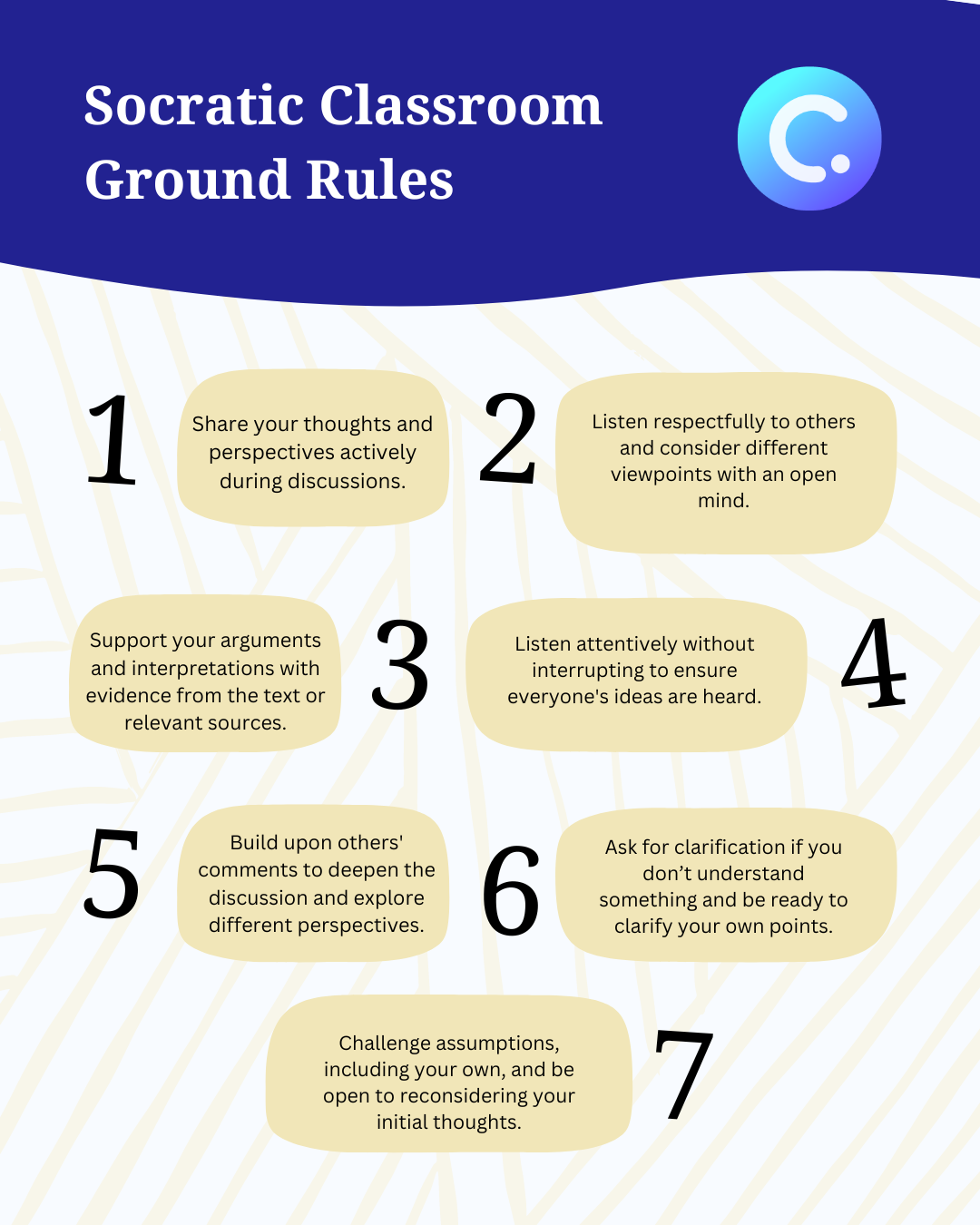
When implementing the Socratic Method of teaching in the classroom, it’s important to establish clear guidelines and ground rules to ensure productive and respectful discussions. The following ground rules are handy guides you can share with your students before beginning a dialogue or discussion:
- Actively Participate
- Respectful Dialogue
- Provide Evidence
- Listen Attentively
- Build on Ideas
- Seek Clarification
- Challenge Assumptions
As a moderator or facilitator, you don’t have to be an expert on the subject matter. What’s important is that you are able to ask the right questions and practice great moderation skills to guide the discussion and help students uncover their own assumptions, biases, and misconceptions. Below are a few tips to help you be an effective Socratic facilitator in your classroom:
- Create a Safe Environment: Foster an atmosphere where students feel comfortable expressing their thoughts and ideas without fear of judgment. Encourage respectful dialogue and remind students of the importance of listening to others.
- Balance Participation: Ensure all students have an opportunity to contribute to the discussion. Encourage quiet or
- Be Flexible: Adapt your questioning and facilitation style based on the flow of the discussion and students’ responses. Allow for unexpected insights or tangents that enrich the exploration of the topic.
- Promote Depth and Breadth: Balance between exploring deeper into specific aspects of the topic and ensuring a broad exploration of different facets and viewpoints. Guide students to connect their insights to broader themes or implications.
- Summarize and Synthesize: Periodically summarize key points or themes discussed during the session to help consolidate understanding. Encourage students to synthesize their insights into coherent conclusions.
- Model Curiosity and Humility: Demonstrate a genuine curiosity about the topic and a willingness to explore ideas collaboratively with students. Embrace the idea that learning is a continual process for both facilitator and learners alike.
Final Thoughts
With these examples, tips and guidelines on Socratic method of teaching, you are well equipped to conduct your own Socratic classroom with confidence. Remember, your role as a facilitator is not to have all the answers, but to guide students in uncovering their own insights and understanding. Don’t forget to enjoy the journey of exploration and discovery with your students along the way!









CustomersWhy Schools love Athena
Community of 8k+ members.
I used to spend hours creating differentiated worksheets with limited impact. Now, I can see exactly where each student is struggling in real-time. I noticed six students struggling with fraction division conceptually, so I pulled them for a targeted mini-lesson while others continued progressing independently.

FAQs
Is Athena safe and compliant with educational privacy standards?

Can Athena be used for different subjects?
How does Athena handle feedback and improve its AI models?
How does Athena provide personalized learning for each student?
What is Athena, and how does it help teachers and students?
How can I get my school or district on board?
How does Athena support responsible AI use for students?
What happens with student data?
Related blogs
2025-06-16 06:28:00 K-12
The Socratic Method of Teaching: Save These Examples & Tips

2025-11-18 11:17:00AI
Magic School AI vs 6 of the Most Mentioned AI for Teachers: Which Tool Is the Best for You?
2025-08-22 23:29:00AI
48 Best ChatGPT Alternatives: ChatGPT is Not the Only Tool for Education
2025-10-20 07:30:00How To
How To Use Perplexity AI for Teaching: Feature Deep Dive + Actionable Use Cases

2025-01-26 21:16:00News
Must-Read Top 10 Trends in Education 2025 and Actionable Insights for Teachers
2025-04-21 17:18:00News
10 Must-Have AI Tools for Teachers in 2025: Enhance Classroom Engagement with ChatGPT and Beyond

2025-08-27 03:13:00K-12
How Athena AI is Transforming K-12 Education Challenges Today
2025-06-04 04:56:00Guide
How to run AI privately on your own computer

2025-06-04 04:56:00New
Learn a new language with ChatGPT Voice

2025-10-22 07:30:00K-12
Top 8 Free Word Cloud Generator Apps You Need to Try in 2025
2025-02-14 04:28:00K-12
8 Best AI-Powered Teaching Assistants For the Busiest Teachers in 2025

2025-04-21 17:18:00AI
10 Effortless Ways to Use AI for Lesson Planning

2025-02-18 04:28:00AI
Top 20 Classroom Apps for Teachers to Use in 2025

2025-08-19 23:29:00
The 12 Best Free AI PowerPoint Generators in 2025
2025-06-08 17:09:00
The Socratic Method of Teaching: Save These Examples & Tips
2025-06-03 17:09:00
The Ultimate Gen Z Terms Dictionary for your class (Latest Top 70 Slangs You Need to Know)!
2025-05-21 10:41:00
Top 9 Key Gen Alpha Characteristics Teachers & Parents Must Know!

2025-05-25 21:39:00AI
How Easy It Is to Create a ChatGPT Lesson Plan: A 7-Step Guide for Beginners
2025-06-02 04:56:00Updates
How to generate comprehensive research reports with Perplexity Labs
2025-05-05 22:56:00
How to get ChatGPT to stop lying: 6 actionable tips for product managers

2025-06-05 08:34:00AI
9 Top AI Web Development Trends to Watch in 2025

Secure, Private, and Built for Schools


